
Trimming & pruning
Clearance off the roof, lines and fences. Deadwood out, shape kept natural. Crown reductions included.
How the job runs
Assess
We work out what needs to come off, and why.Climb
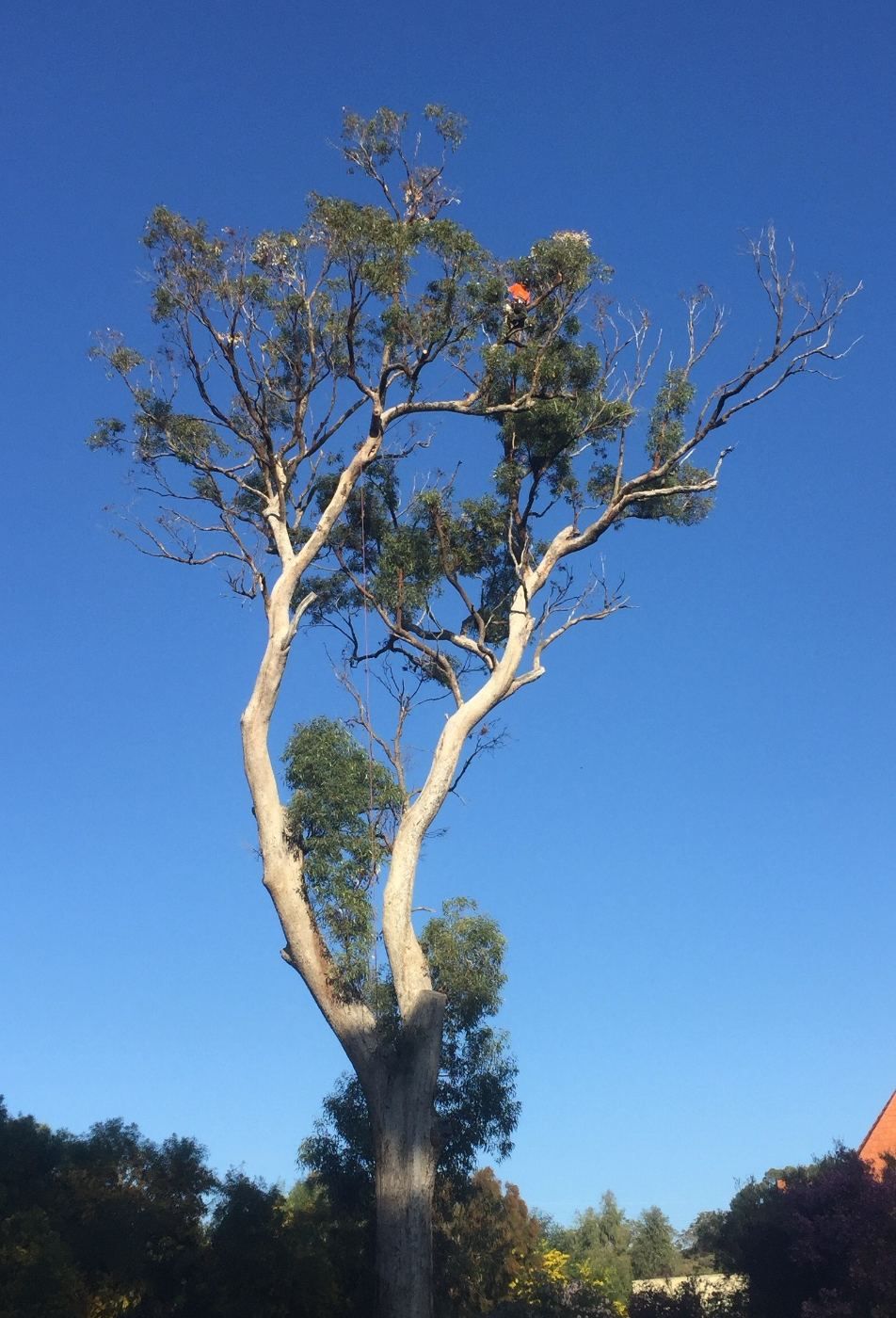
Climbed into the tree, not lopped from a ladder.Cut
Cuts made where the tree can recover.Clean up
Green waste chipped and taken away.
Why prune a tree
- Clearance: branches off the roof, gutters, fences, driveways and paths.
- Deadwood: dead branches fall without warning, especially from gums in wind and heat.
- Weight: long, heavy limbs can be shortened so they are less likely to fail.
- Light and views: thinning the crown lets light through without stripping the tree.
- Structure: shaping a young tree early saves bigger cuts later.
Pruning, not lopping
Lopping (cutting a tree back to stubs) leaves big wounds the tree can't seal. It answers with a mass of fast, weakly attached shoots, and decay sets into the stubs, so a lopped tree often ends up more dangerous than before. Good pruning takes branches off at a natural point, such as the branch collar or a smaller branch that can take over. Good pruning follows the Australian Standard for pruning amenity trees (AS 4373). The tree recovers, keeps its shape and needs less work in future.
Pruning a regulated tree
Some pruning doesn't need approval: taking off no more than 30% of the crown to remove dead or diseased wood, or branches that are a real risk to a building or to people, no more than once every 5 years. Anything more counts as tree-damaging activity and needs development approval. If your tree is regulated, we'll keep the work within the allowance, or help you apply when it needs more.
Crown reductions
A crown reduction brings a tree's height or spread back evenly, cutting each branch to a smaller branch rather than to a stub. It can take weight off a tree near a house without removing it. Our Stonyfell job, six sugar gums reduced and all six kept, is an example.
Common questions
How much of a tree can be pruned?
As little as does the job. Heavy pruning stresses a tree, and for a regulated tree, more than 30% of the crown needs approval. If a lighter cut is enough, we'll say so.
When is the best time to prune?
Deadwood and hazards can be dealt with any time. Bigger shaping cuts on deciduous trees are usually best in late winter, before spring growth. Most gums can be pruned year-round.
Can I cut my neighbour's branches that hang over the fence?
Usually you can cut overhanging branches back to the boundary, but not if it damages a regulated tree without approval. Talk to your neighbour first. We can tell you whether the tree is regulated.
Do you prune palms?
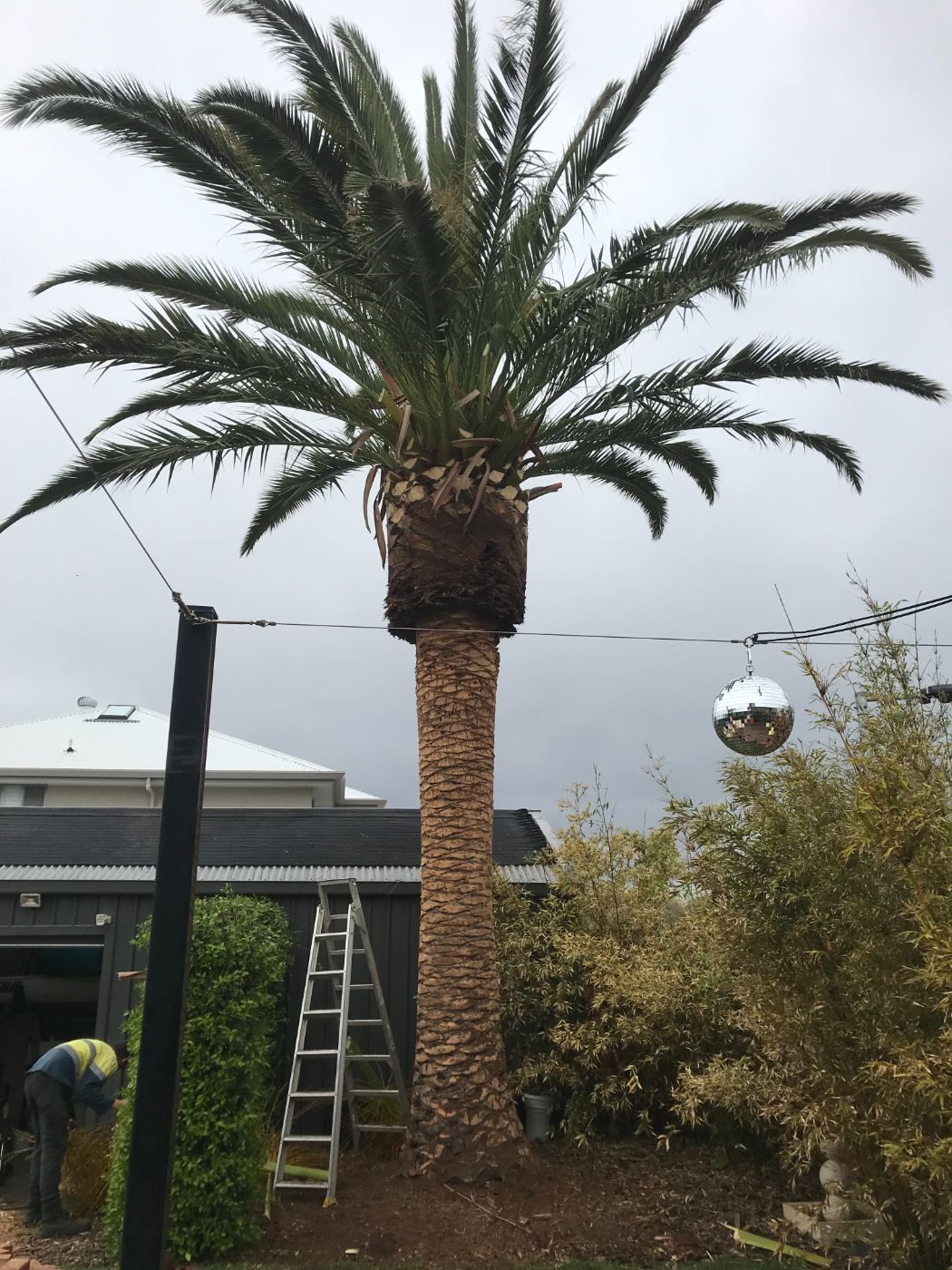
Yes. We clean up palms, taking off dead fronds and old seed heads.
On the job
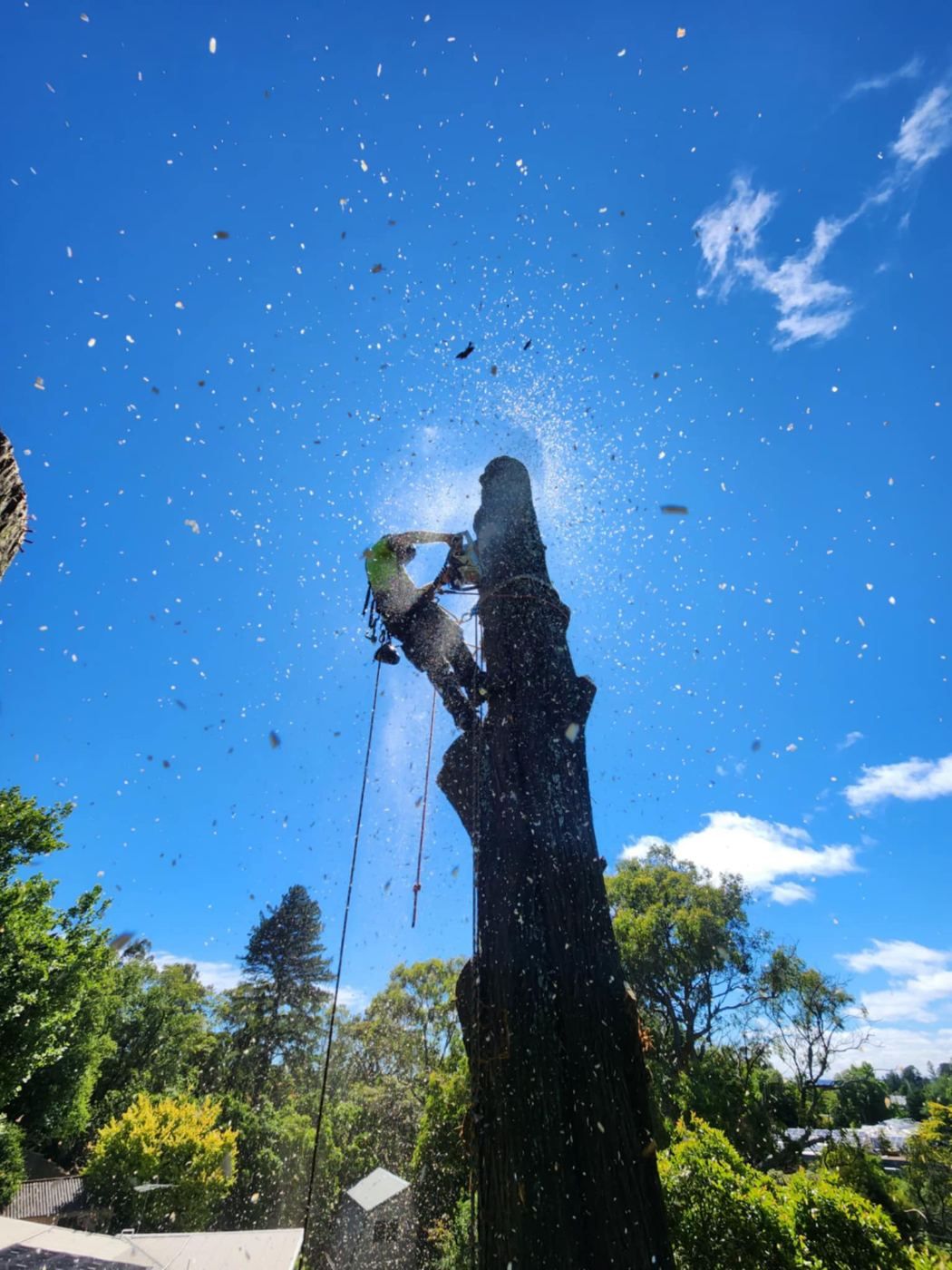
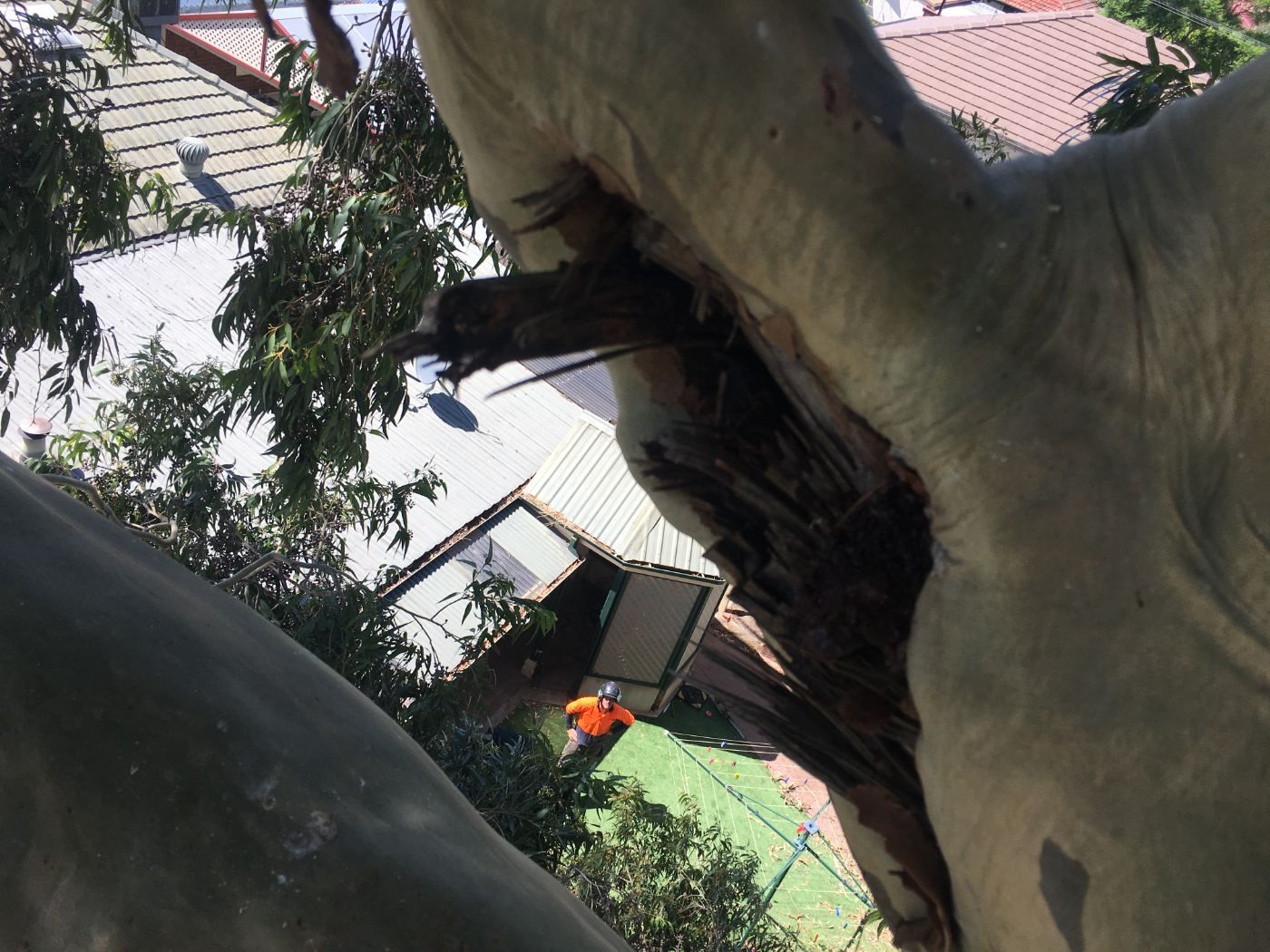
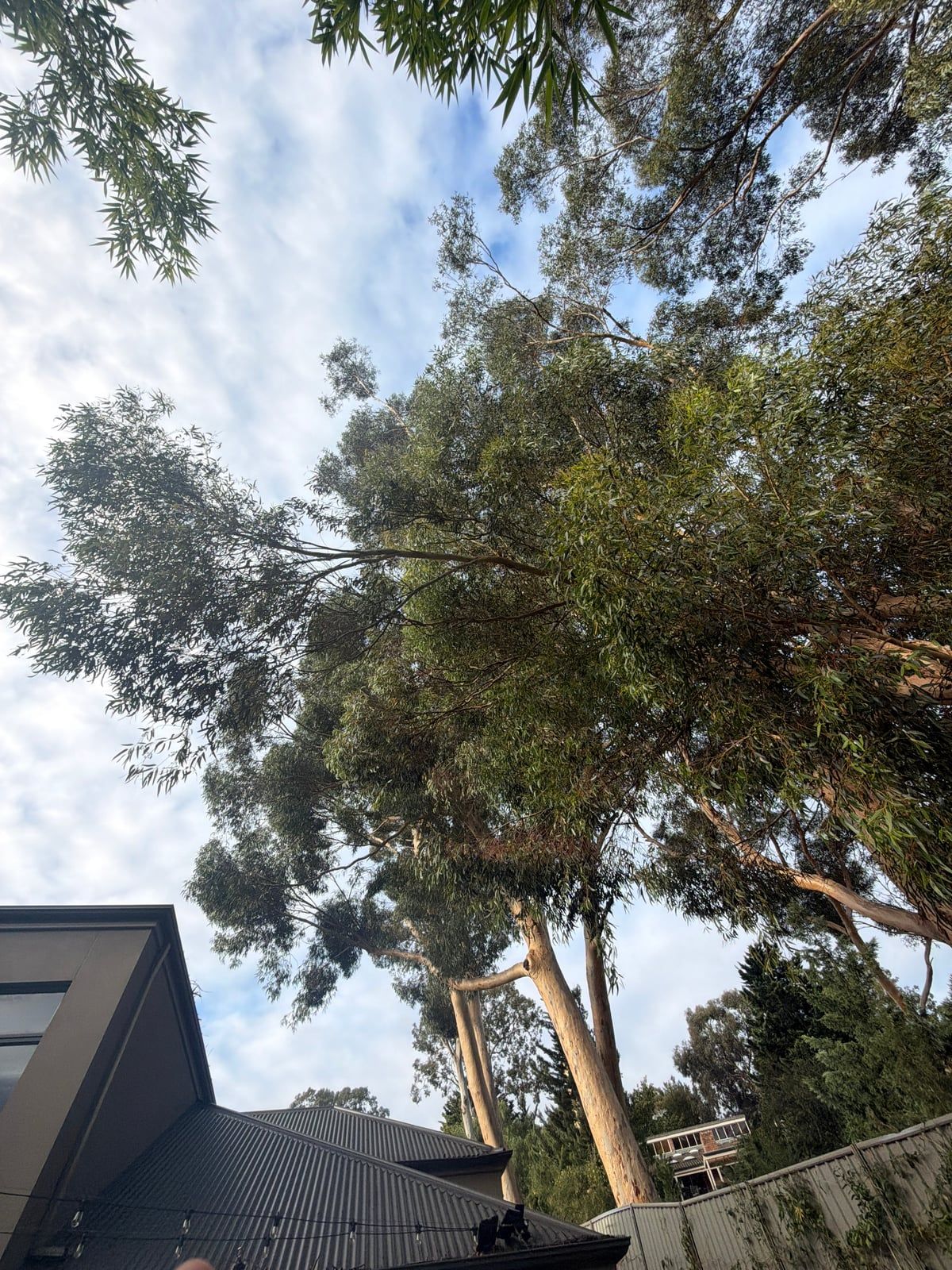
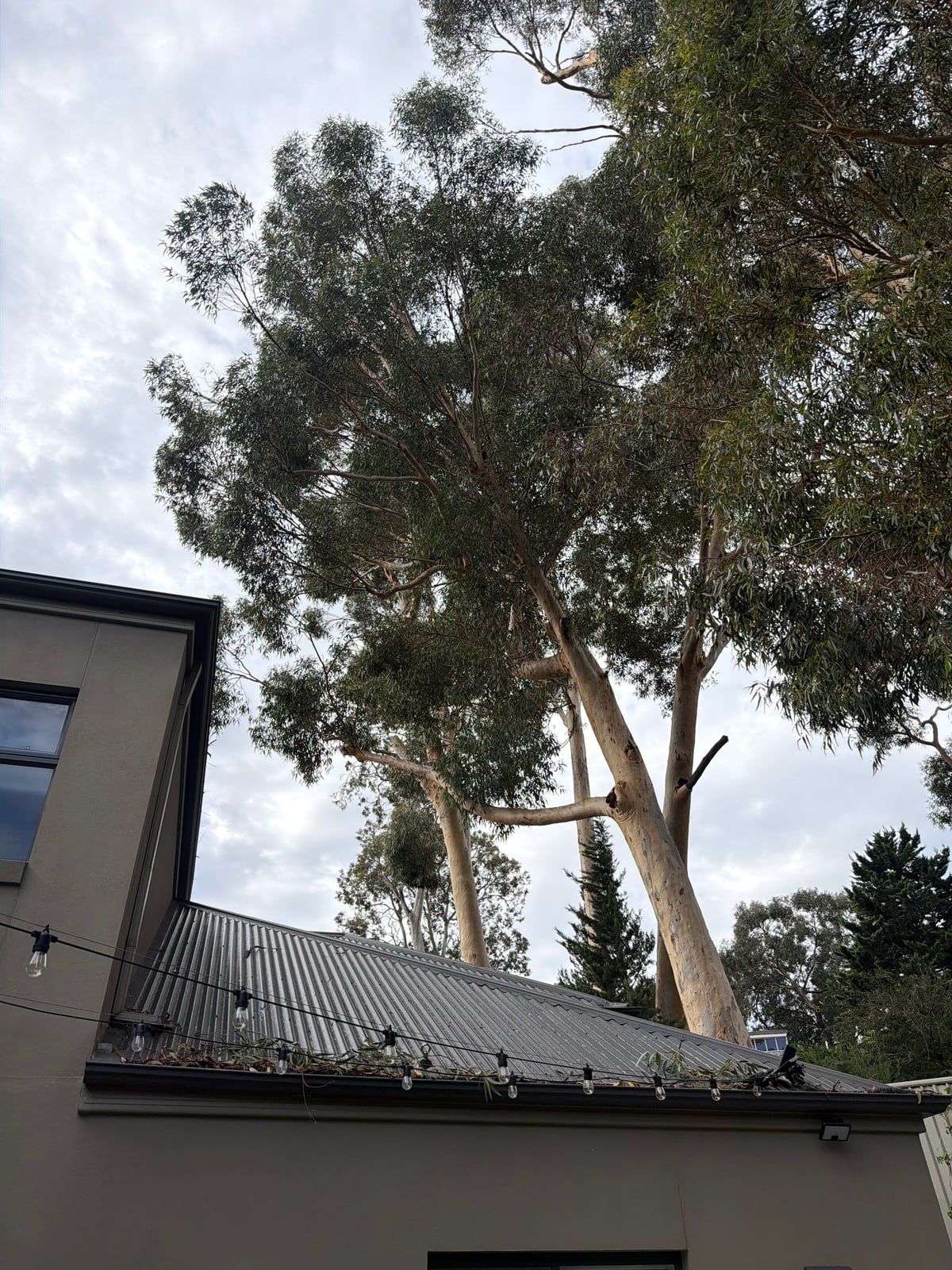
Six sugar gums. All six kept.
Crown reductions away from the house on six large sugar gums, part-funded through the City of Burnside’s RASTA scheme.
Where we work
Trimming & pruning across Adelaide's southern and eastern suburbs and the Adelaide Hills. Each area page covers the local council's tree rules.